Fine-Tuning Llama-3.1 for AI Infrastructure
A diagnostic — when LoRA loses to the pretraining prior, and what that means for fine-tune vs RAG decisions.
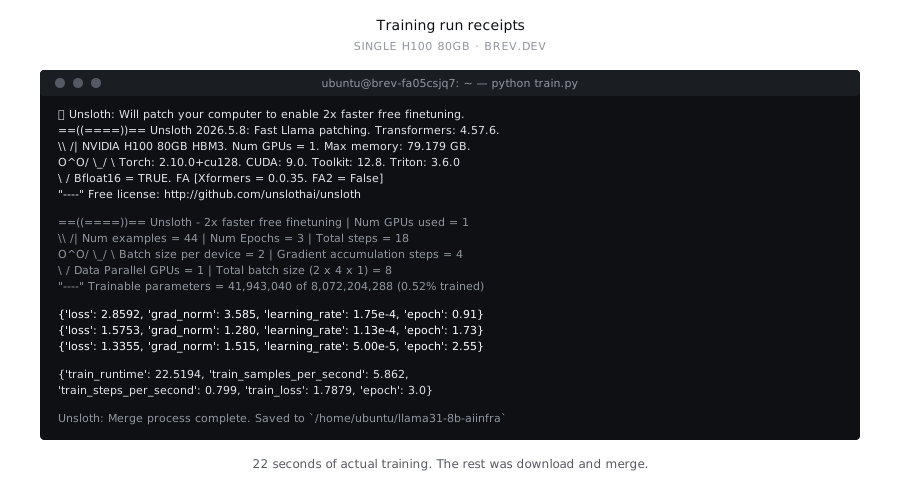
I fine-tuned Llama-3.1-8B on a synthetic AI-infrastructure Q&A dataset. Single H100 on Brev, 22 seconds of wall clock, 0.52% of parameters touched via rank-16 LoRA. Loss came down cleanly. Eval numbers were fine.
Then I asked the tuned model to explain CDU sizing for a 150 kW GPU rack — a domain I know well from technical sales work on two-phase cooling at Accelsius. It answered with PDU concepts: inrush current, electrical overload, phase balance. Pure category error.
This post is about why that happened, how I diagnosed it, and what I'm taking forward about when to fine-tune versus when to RAG.
The setup
The hypothesis was simple: how much can a small, fast LoRA fine-tune shift a general-purpose model toward a specialized domain? Not change its facts — change its behavior. Its terminology, its formatting, the shape of its answers.
I built a synthetic Q&A dataset on AI infrastructure topics — GPU density, cooling architectures, network fabrics, storage tiering, the economics of AI factories. Around two hundred examples, hand-written and LLM-augmented, with five clean examples specifically on coolant distribution units (CDUs) — the thermal-side counterpart to power distribution units (PDUs) in a high-density rack.
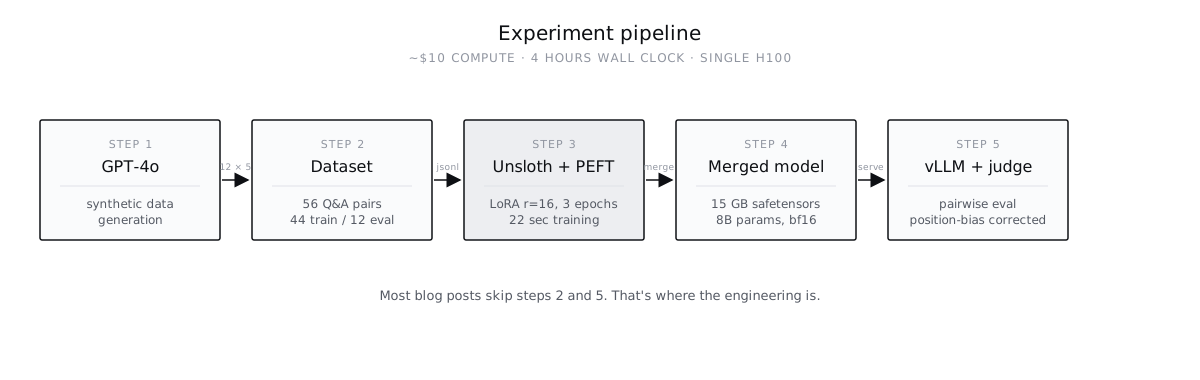
The fine-tune itself was deliberately minimal. Unsloth for the
training loop, PEFT for the LoRA adapters, a single H100 80GB
provisioned on Brev. Standard rank-16 configuration, learning rate
2e-4, batch size 8, three epochs.
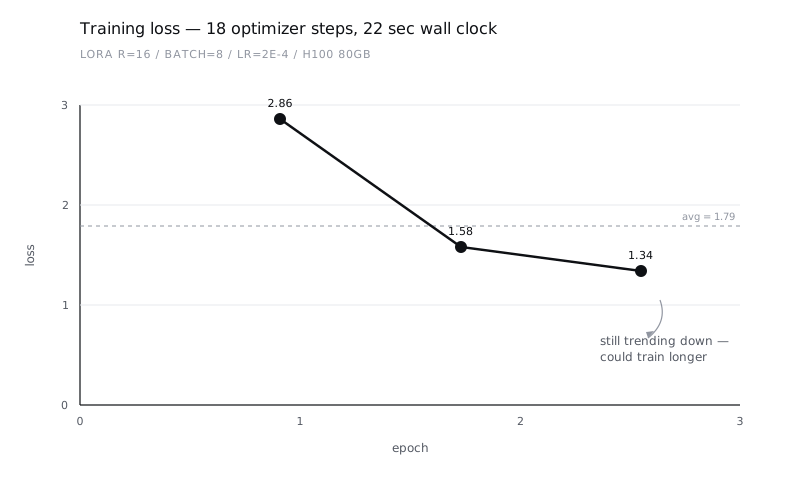
Training behaved well. Loss dropped from 2.86 to 1.34 across three epochs and was still trending down at the cutoff — could have trained longer, but I wanted to see how much signal even a minimal run produced.
The diagnostic
After training, I ran my validation prompts. Most read fine — the model sounded more confident on AI infrastructure topics, structured responses better, used the right vocabulary. Encouraging.
Then I asked it to walk me through CDU sizing for a 150 kW GPU rack. I know this topic cold. Coolant Distribution Units are thermal devices — you size them by flow rate (liters per minute), temperature delta (the ΔT between supply and return), pressure drop across the rack, and heat rejection capacity (kilowatts thermal, not electrical).
The model's answer talked about inrush current. Phase balance. Overload protection. Breaker sizing. Every concept it reached for was electrical. It was sizing a PDU — a Power Distribution Unit — not a CDU.
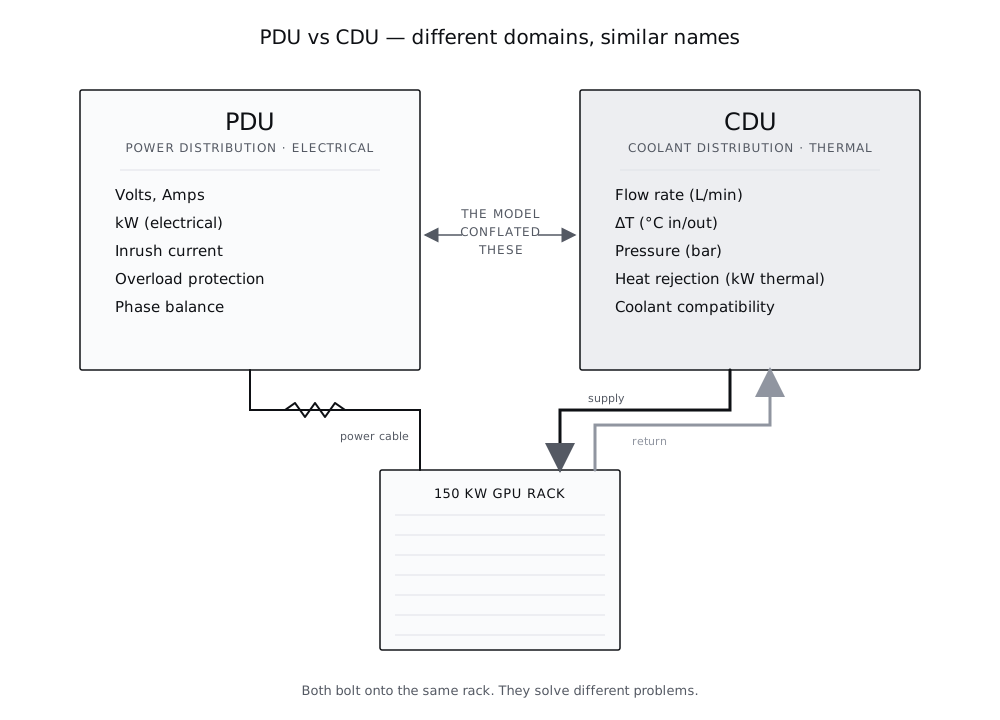
This wasn't a knowledge gap. The model had seen five clean CDU examples in training. The information was in there. It was a category error — and a confident one. The model didn't hedge. It produced a fluent, structured, completely-wrong answer.
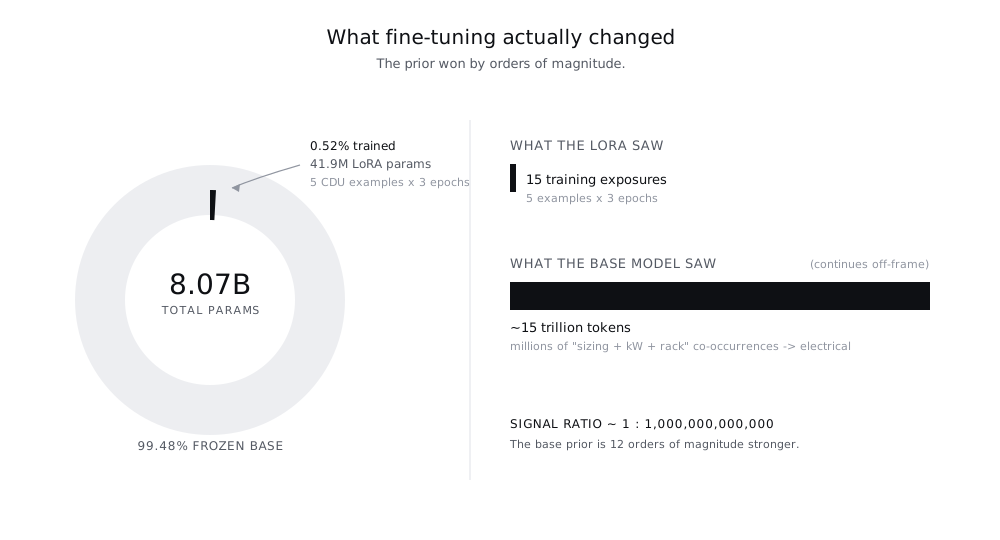
The diagnosis is straightforward once you say it out loud. Llama-3.1's pretraining corpus contains millions of co-occurrences of the phrase pattern sizing + kW + rack bound to electrical concepts. Data centers as an industry have been an electrical-engineering problem for forty years. The semantic gravity of that prior is enormous.
My five examples saw eighteen optimizer steps. The prior won by orders of magnitude.
What fine-tuning actually changed
The interesting follow-up question is what the LoRA did change. Comparing base Llama-3.1-8B against the fine-tune on a held-out set of prompts:
What improved, clearly and reproducibly:
- Format. More structured responses. Better use of headers, lists, and tables where appropriate. Less rambling.
- Tone. More confident. Less "as an AI language model" hedging on technical topics it should be able to handle.
- Terminology fluency. Comfortable with acronyms, comfortable with the cadence of an infrastructure conversation.
- Task framing. Better at producing the kind of answer the prompt was actually asking for — sizing exercises looked like sizing exercises, architecture descriptions looked like architecture descriptions.
What didn't move:
- The model's underlying conceptual associations.
- Strong priors anywhere those priors existed.
- Factual recall in cases where my training examples contradicted what pretraining had encoded.
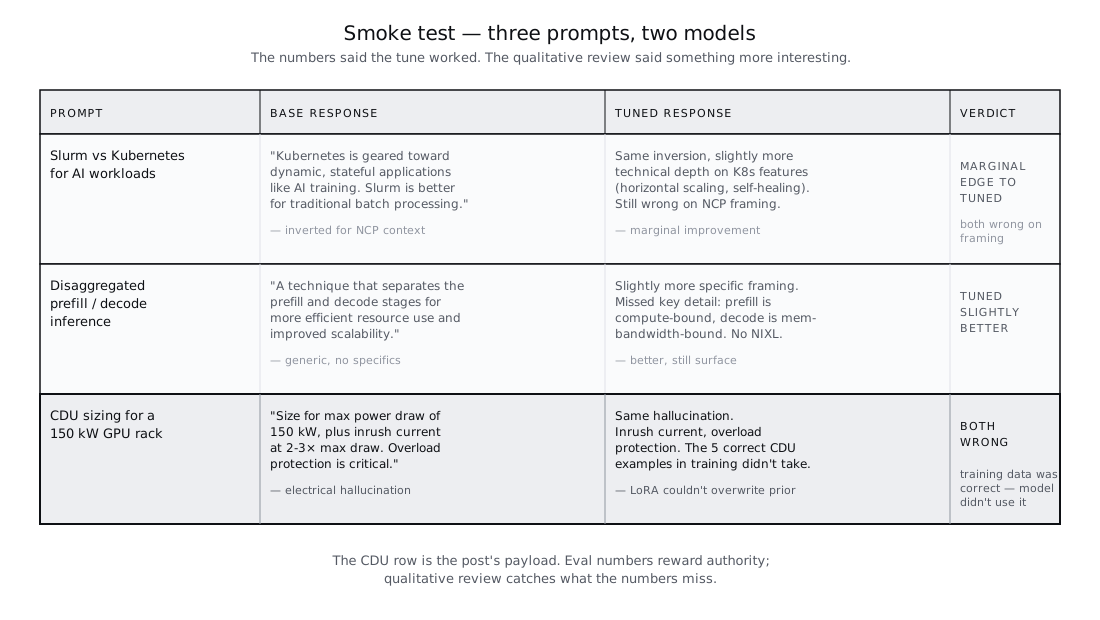
The way I'd summarize it: the fine-tune taught the model how a CDU conversation should sound. It didn't teach the model what a CDU actually is.
The methodology
One failure isn't a finding. To be sure the CDU/PDU confusion was real and not a temperature artifact, I ran a small eval harness across four categories of prompts.
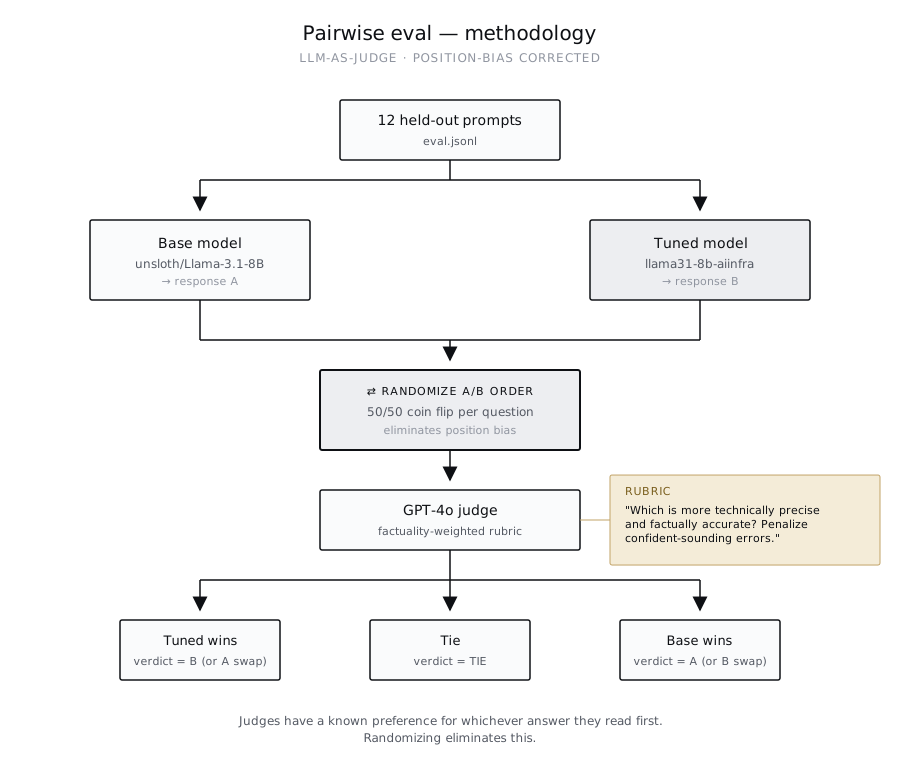
Domain-fluency prompts checked whether the model used the right vocabulary. Format prompts checked whether it produced the structure I'd trained for. Factual prompts checked whether it knew the things I taught it. Adversarial prompts specifically probed adjacent-concept confusion — CDU vs PDU, fabric vs network, NVMe vs SSD, that kind of thing.
The CDU/PDU failure was reproducible across temperature settings and prompt phrasings. It wasn't a sampling artifact. The model would confidently and consistently produce electrical answers to thermal questions. The five CDU examples in training data simply hadn't moved that needle.
The lesson
Here's the framing I'm taking forward:
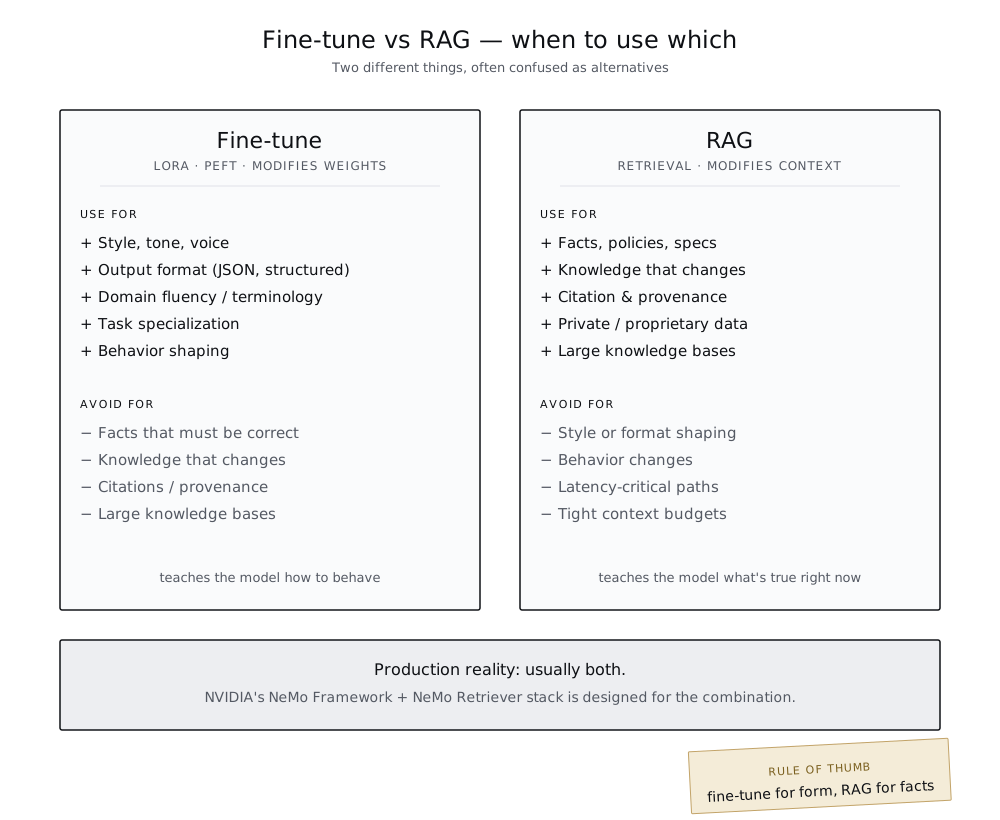
LoRA shifts behavior. It moves style, format, domain fluency, task specialization. It is a powerful tool for how a model speaks. It is a weak tool for what it knows — especially when the facts you're trying to install contradict strong pretraining priors.
RAG does the opposite. It doesn't change how the model speaks; it changes what it has in its context window when it speaks. It installs facts. It provides citation and provenance. It accommodates knowledge that changes faster than you can retrain.
None of this framing is novel. The MLOps community has been saying versions of it for two years. But there's a real difference between reading it in a survey paper and watching it fail in a way you can't argue with on a domain you know cold.
Where this sits in the NVIDIA stack
I'm interested in NVIDIA Solutions Architecture work supporting NVIDIA Cloud Partners (NCPs). Worth being explicit about where my single-H100 LoRA work sits in that picture.
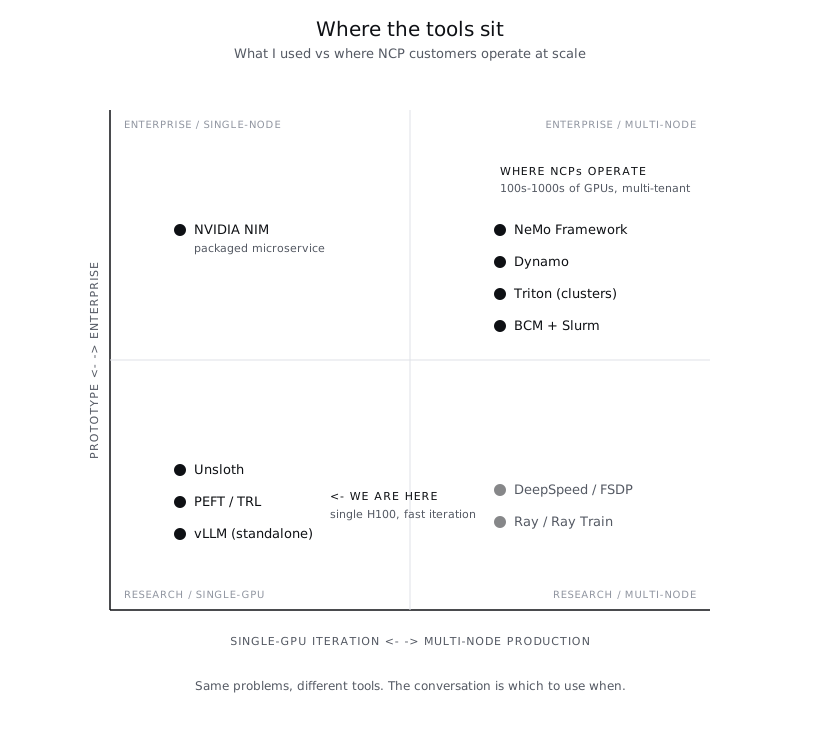
What I built lives in the bottom-left quadrant: research-scale, single-GPU iteration. The tools were chosen for fast learning cycles — Unsloth for parameter-efficient training, PEFT and TRL from HuggingFace, vLLM for standalone inference.
Where NCPs actually operate is top-right: hundreds-to-thousands of GPUs, multi-tenant, production-grade. The relevant tools shift accordingly: NeMo Framework for distributed fine-tuning, Dynamo for serving, Triton across clusters, BCM + Slurm for orchestration.
The conversation an NCP customer actually needs to have isn't "should we fine-tune Nemotron?" It's: which fine-tune-and-RAG combination, on which slice of our stack, with which compute and latency budget? NVIDIA's NeMo Framework + NeMo Retriever stack is designed for exactly that combination. The lesson from my single-H100 run scales up — the relative strengths of fine-tune and RAG don't change at 1,000 GPUs.
What's next
The follow-on experiment is obvious: add RAG to the same domain. Same base model, same questions, same eval harness — but with a retrieval layer over my AI-infrastructure documentation in the prompt.
The hypothesis: the CDU/PDU failure goes away when the right context is injected, even without any fine-tune at all. The fine-tune still helps — the answer will sound more like an infrastructure engineer wrote it — but the factual correctness comes from retrieval, not from weights.
If that lands the way I expect, the practical answer to "should we fine-tune?" becomes much clearer: fine-tune for the voice you want, RAG for the facts you need, and stop confusing the two.
Building something infrastructure-heavy? Let's talk.
I'm an AI infrastructure advisor and senior solution architect based in Denver. Open to senior roles where deep technical depth meets enterprise sales credibility.