Jim BoothPortfolio
Denver, Colorado · AI Infrastructure Engineering

Thirty years in infrastructure.
Still building from scratch.

I build transformers from the attention layer up, design two-phase cooling for GPU-dense racks, and run production systems where real money is on the line. Every layer I talk about, I've built something in.

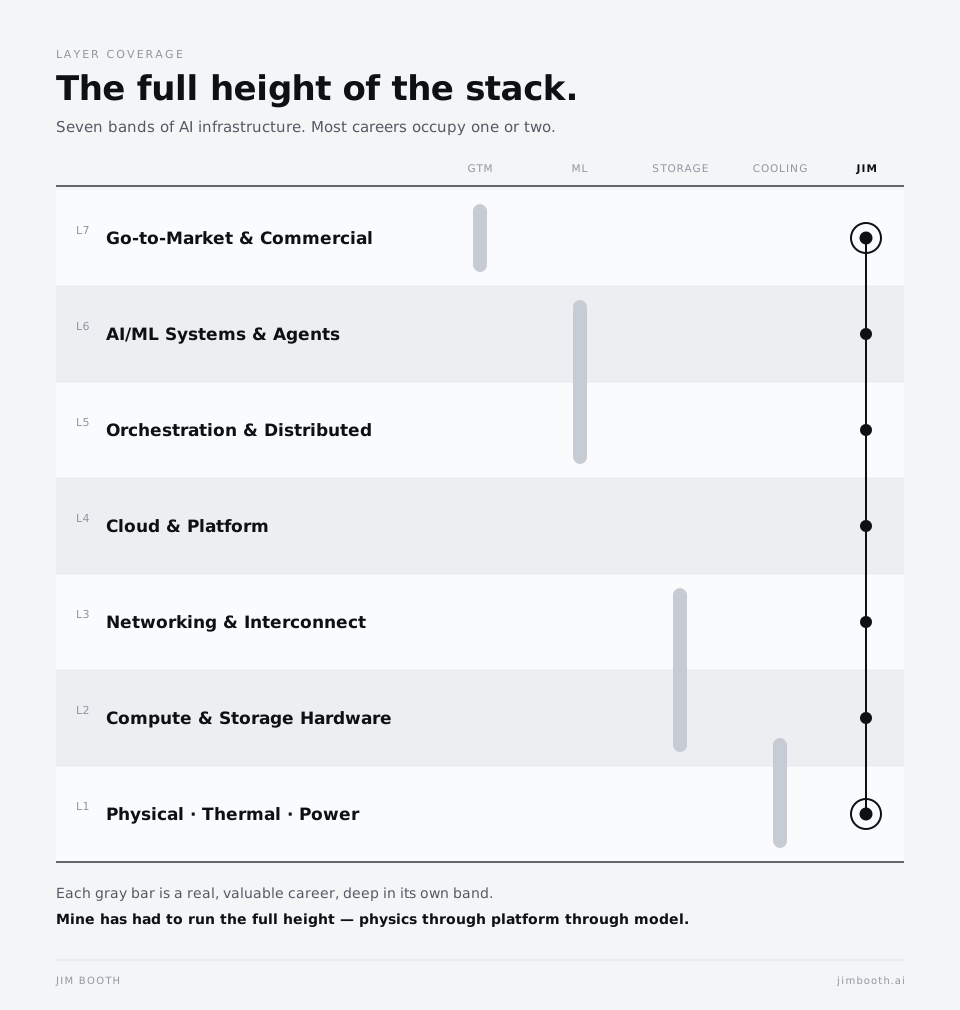
Layer coverage — seven bands of AI infrastructure, from Physical, Thermal and Power up through Go-to-Market and Commercial. Typical career tracks span one or two bands; one line runs the full height.
7 layers
AI cluster stack, mapped end to end
6 strategies
Running live, concurrent
24/7
Multi-agent system, unattended
0 frameworks
Transformer from the attention math

Build to understand.

Live · In production
01 · Production system

A multi-agent system that runs a business unattended

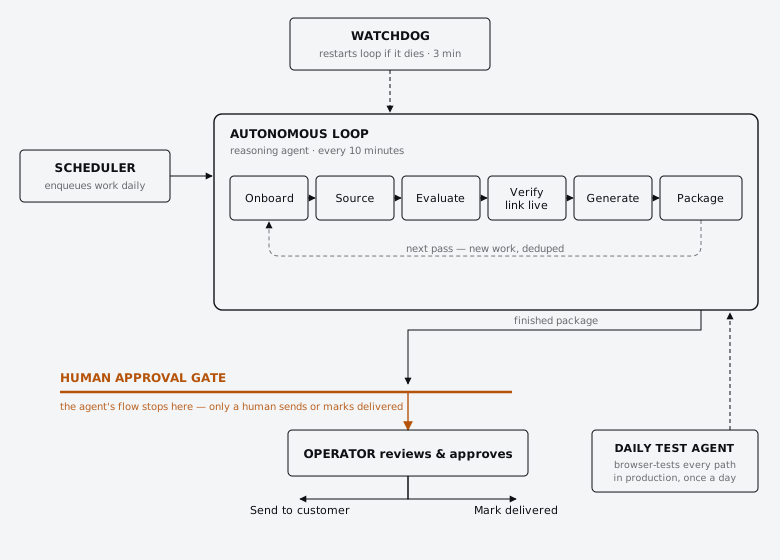
Autonomous agents sourcing, writing, verifying, and packaging real work 24/7 — with a watchdog, human approval gates, and daily production testing

Not a demo. A production system where a reasoning agent walks each job through a state machine every ten minutes: it sources live material, evaluates each option against the goal, verifies every external link is genuinely live, generates the tailored work products, and assembles the package. A watchdog restarts it if it dies. A separate agent browser-tests the whole pipeline in production every day, forced-failure cases included.

The interesting part isn't wiring a model to tools — that takes an afternoon. It's the reliability work demos never show: money-touching correctness, self-diagnosing failure telemetry, and guardrails that forbid the agent from the two irreversible actions. Knowing where to put the human is as much of the engineering as the automation.

Why this matters

Every company is standing up an agent initiative and stalling at the wall between a working demo and a system that survives production. I've already paid that tuition, with real transactions on the line. This is the far side of that wall.
Autonomous agents State machine launchd / cron Human-in-the-loop Production testing Reliability engineering
In progress · Ongoing
02 · Personal research

From Watts to Weights

Closing the loop between sizing infrastructure-up and model-down

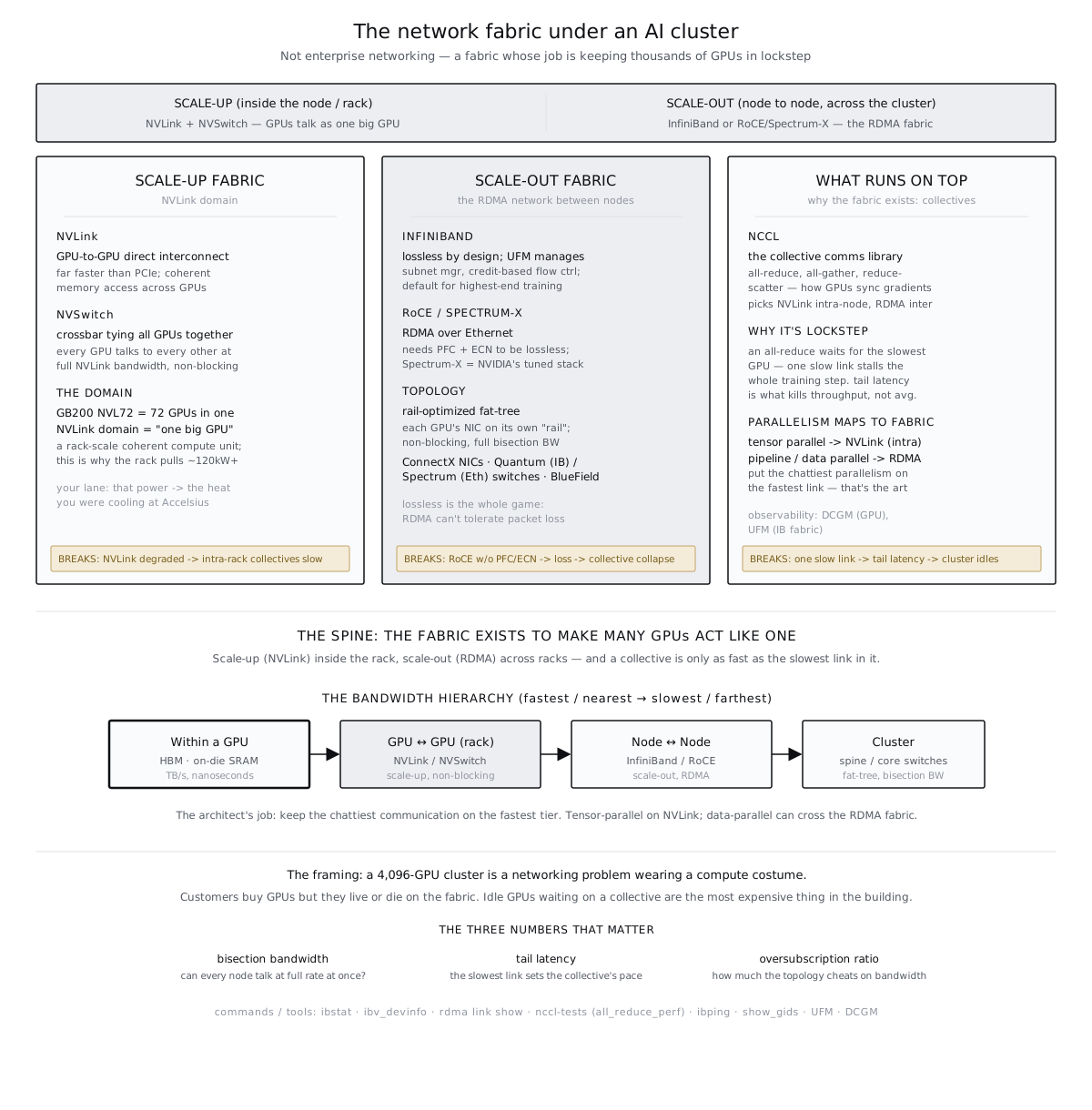
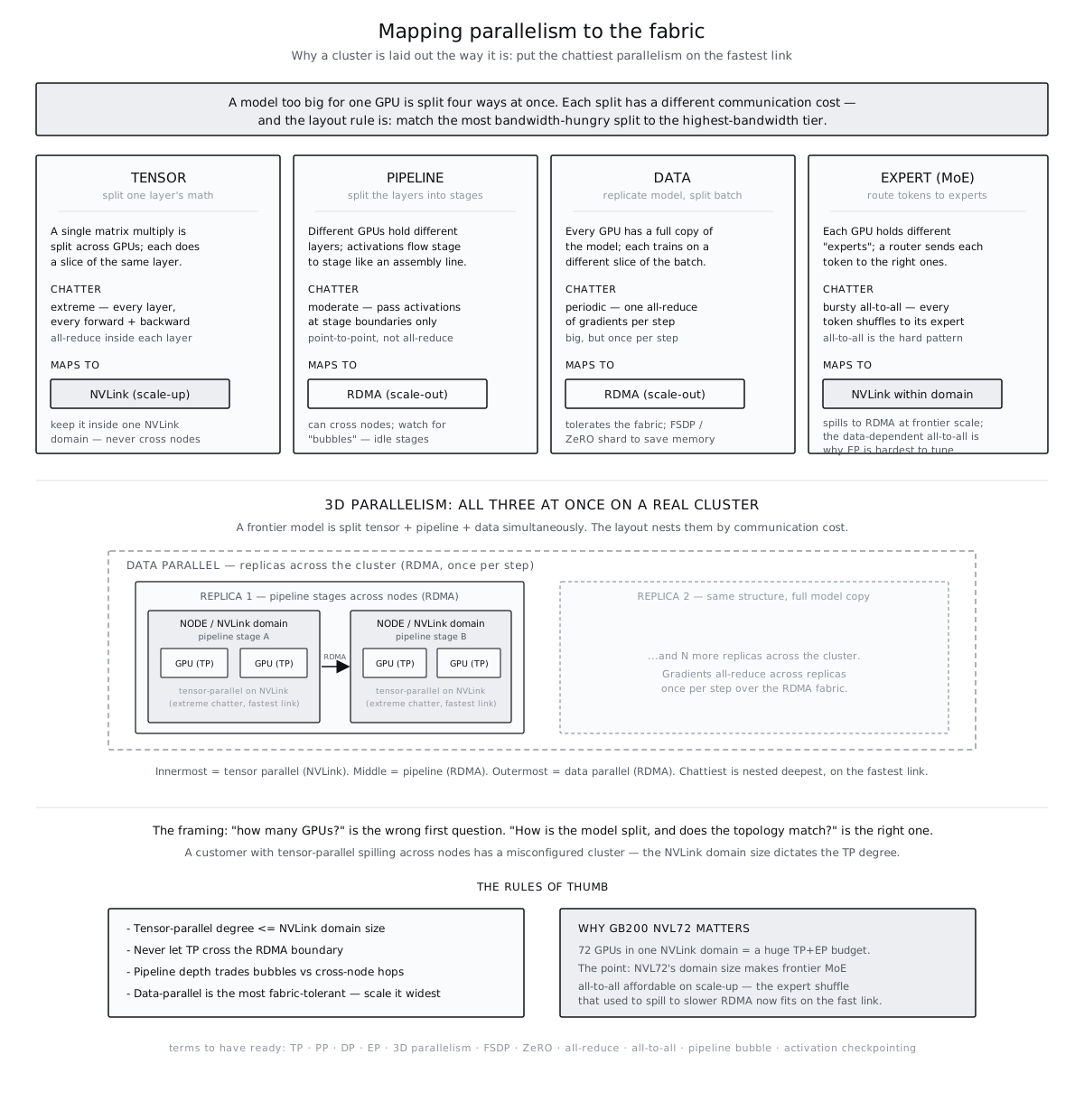
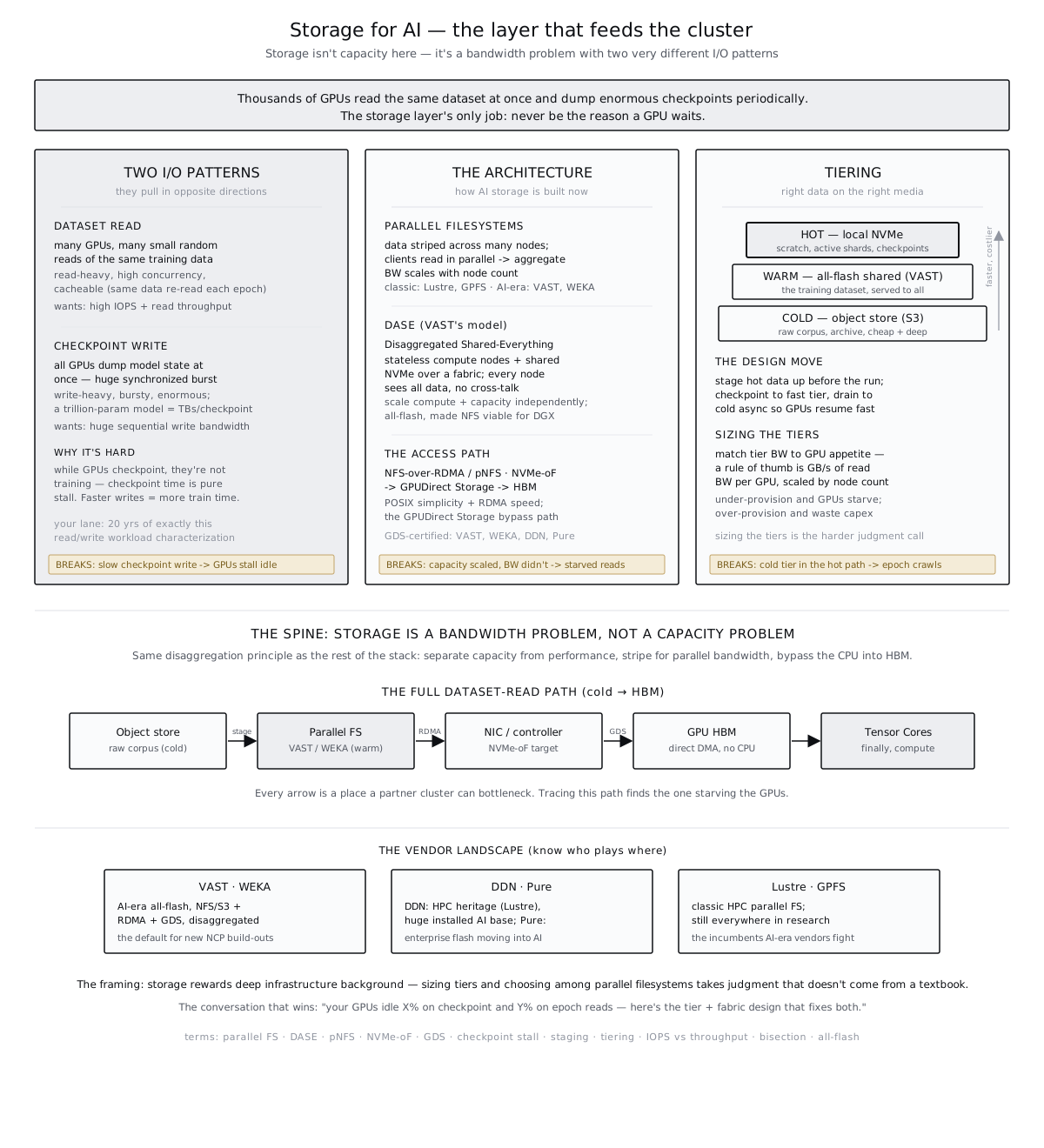
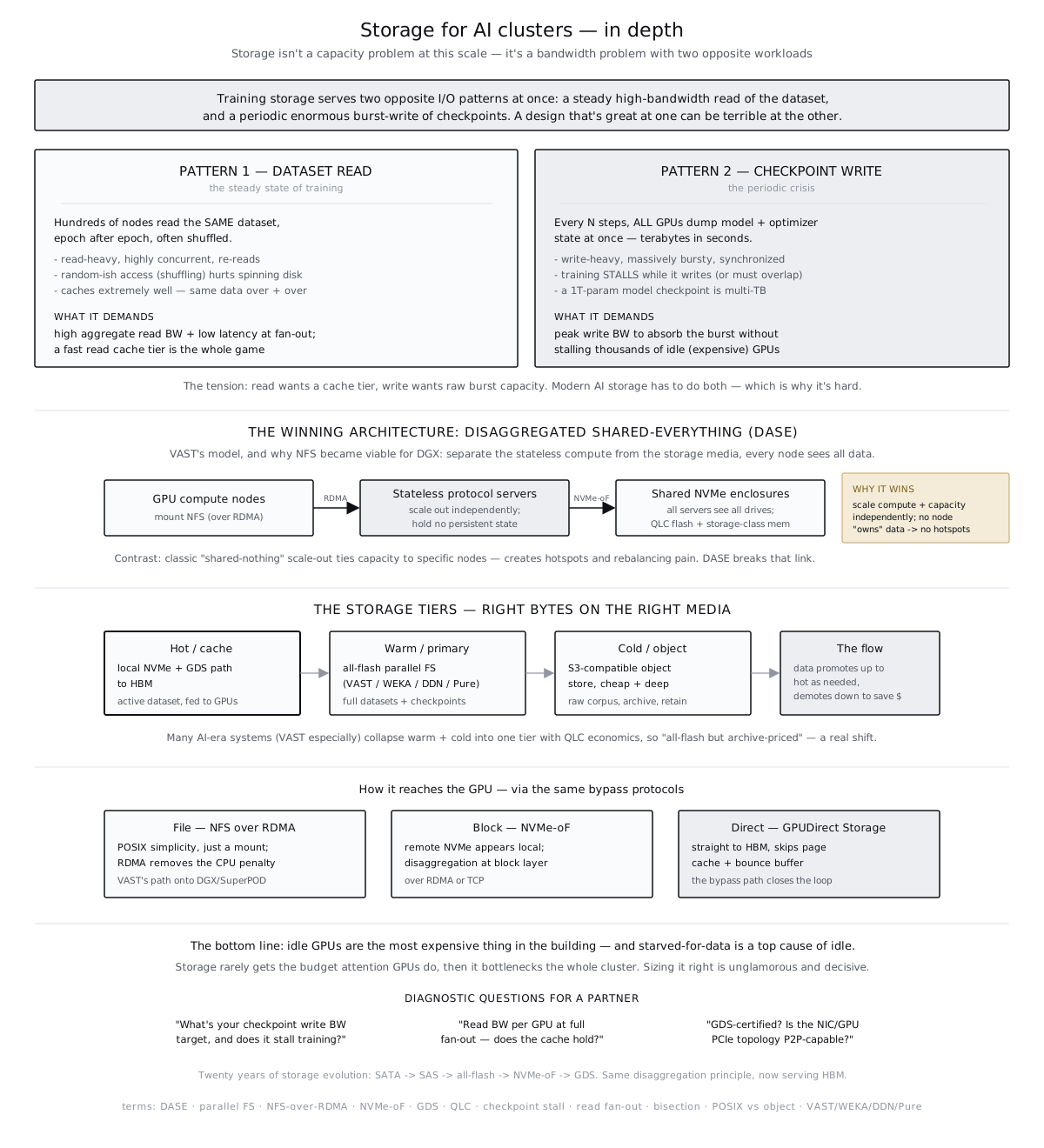
I've been sizing AI factories from the bottom up — power envelope, cooling capacity, rack density. A modern AI-cluster customer needs the other end of that equation: model parameters, parallelism strategy, GPU count, interconnect topology.

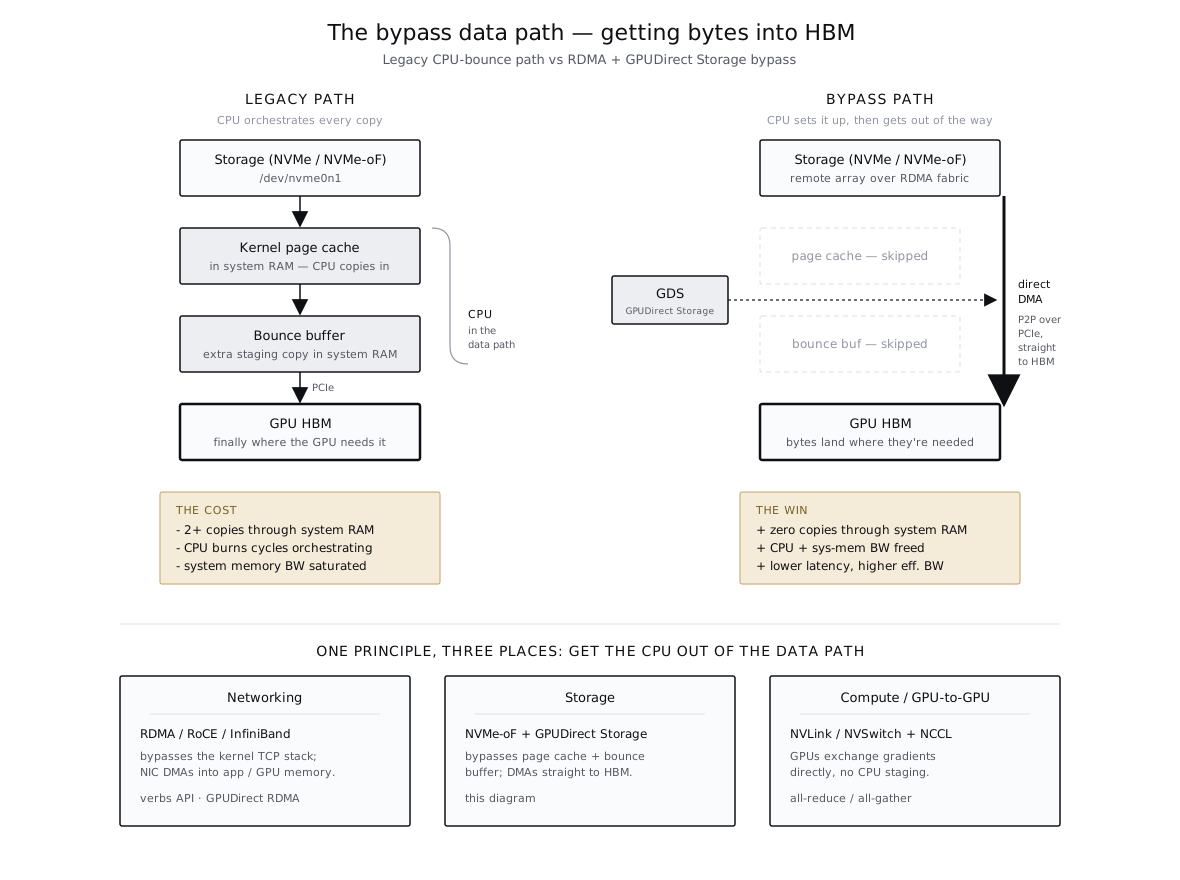
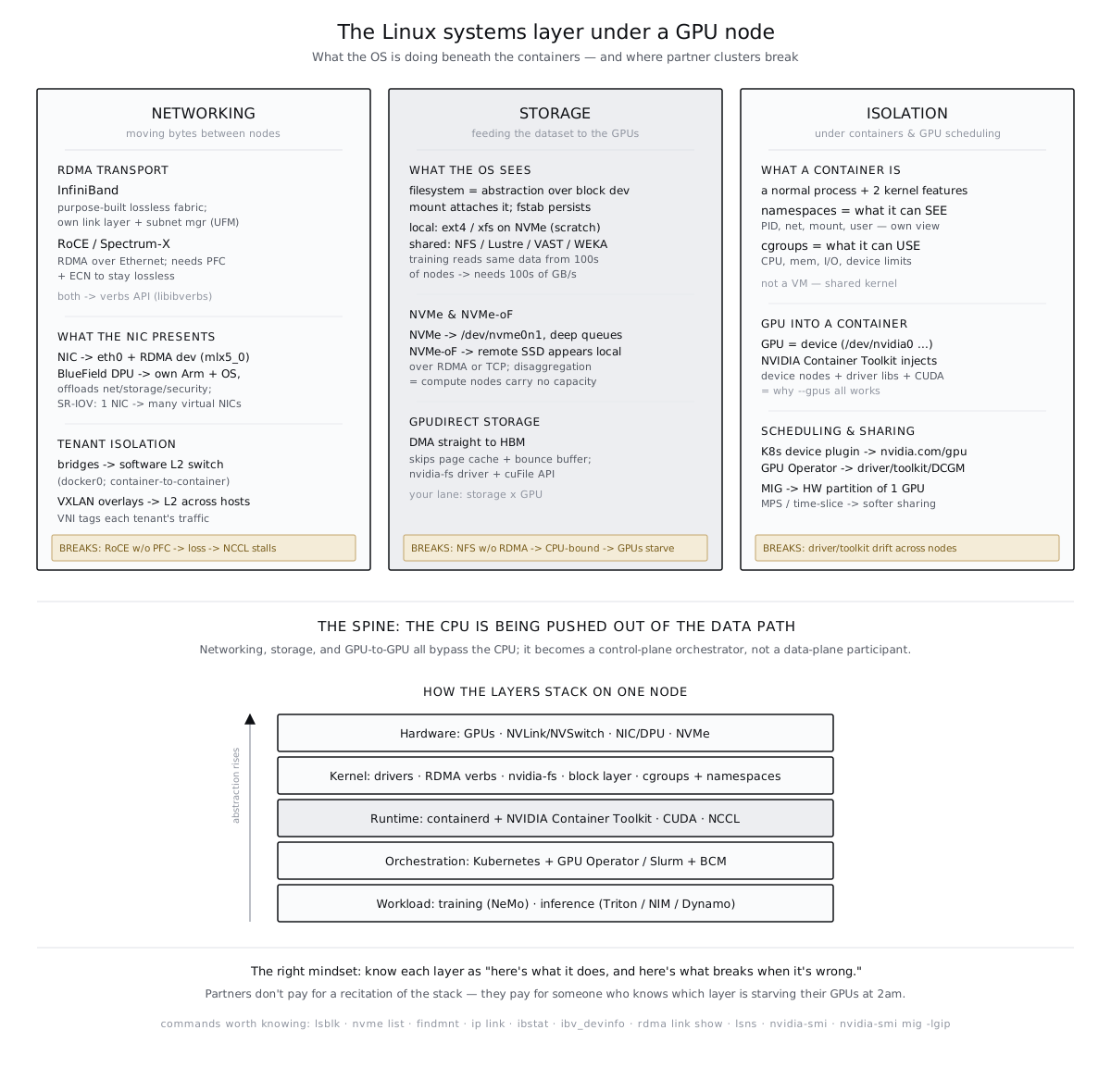
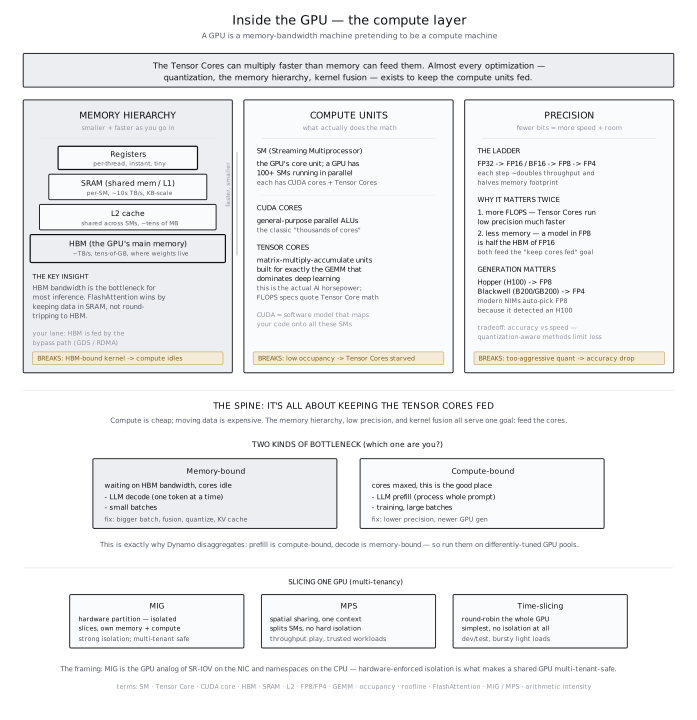
This is the synthesis I've been building — seven diagrams walking the layers of an AI cluster from compute up through fabric and back down through storage and OS. The full chain a customer needs to size, and the seams where infrastructure-up thinking meets model-down thinking.

Why this matters

Most can do the parallelism math. Very few can connect it back to choices of RDHX, PG-25 liquid cool, or two-phase DTC cooling. The conversation a customer building an AI factory actually needs runs the full chain — from model arithmetic through cluster topology to power and cooling. I want to be able to hold both ends of that conversation.

NVLink / NVSwitch InfiniBand / RDMA 3D Parallelism NCCL GPUDirect Storage DGX SuperPOD GB200 NVL72 Magnum IO
Complete · Writeup published
03 · Personal research

Fine-Tuning Llama-3.1 for AI Infrastructure

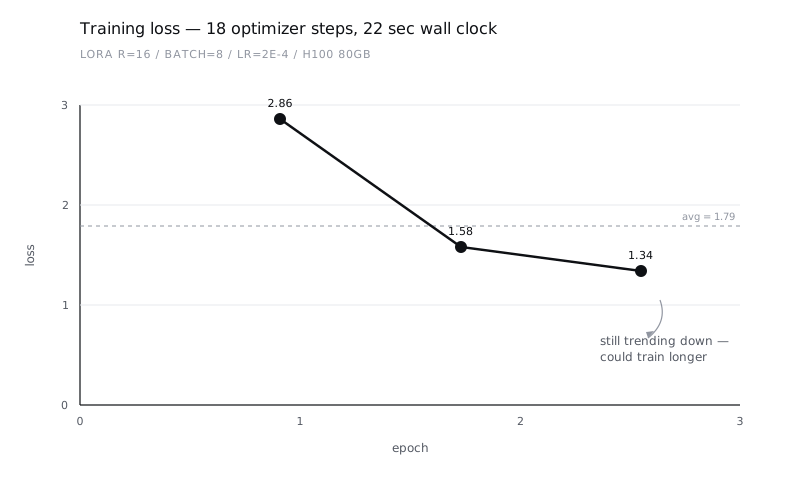
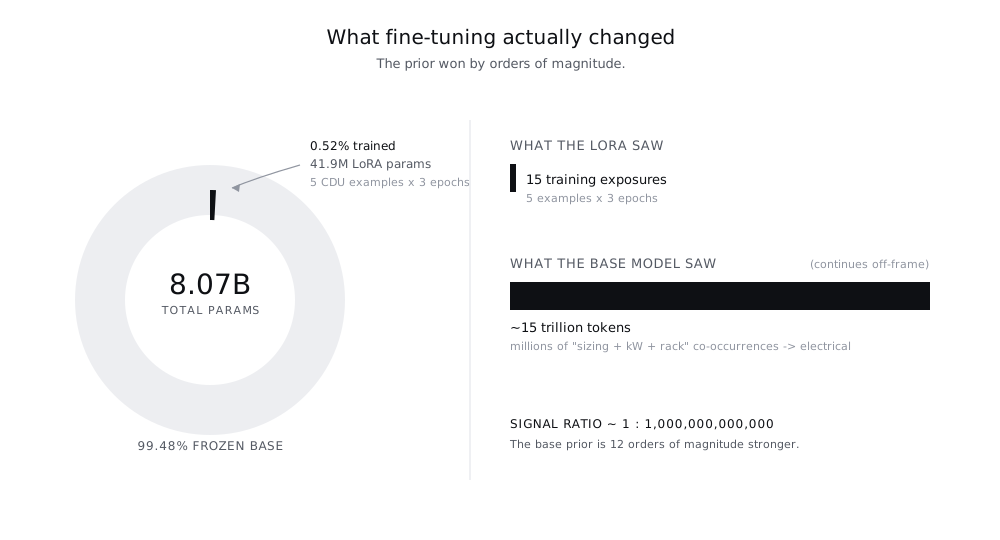
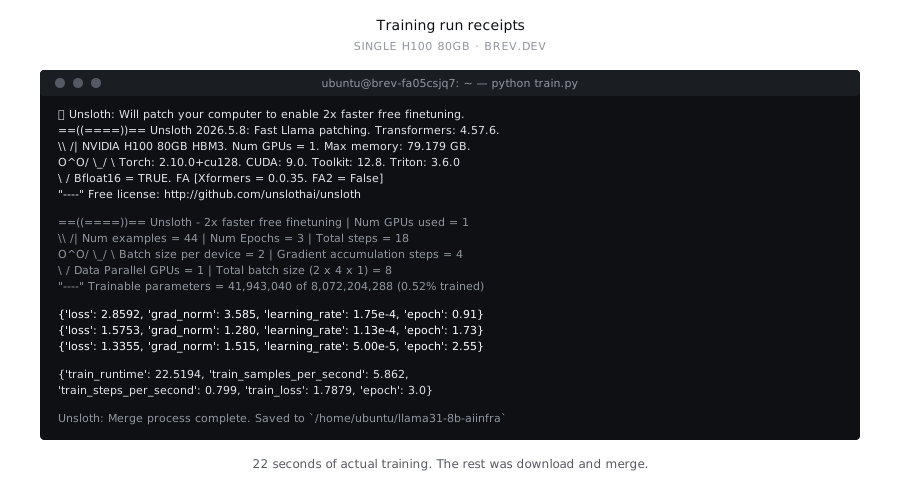
LoRA · 0.52% of parameters touched · 22 seconds on one H100

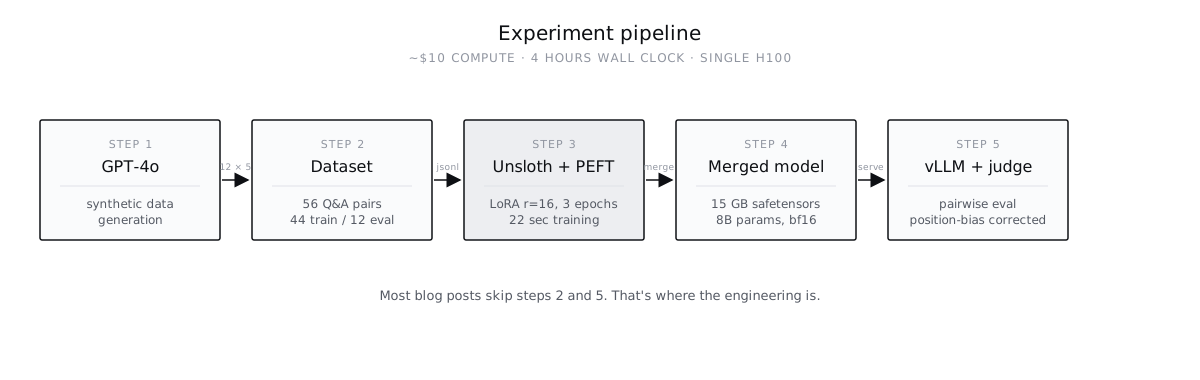
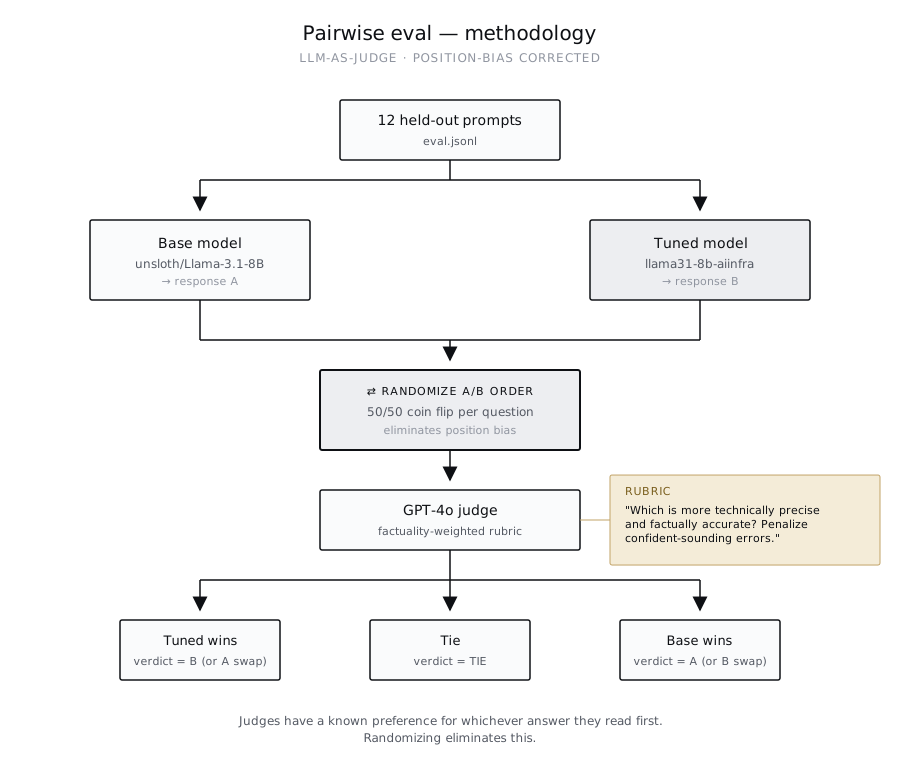
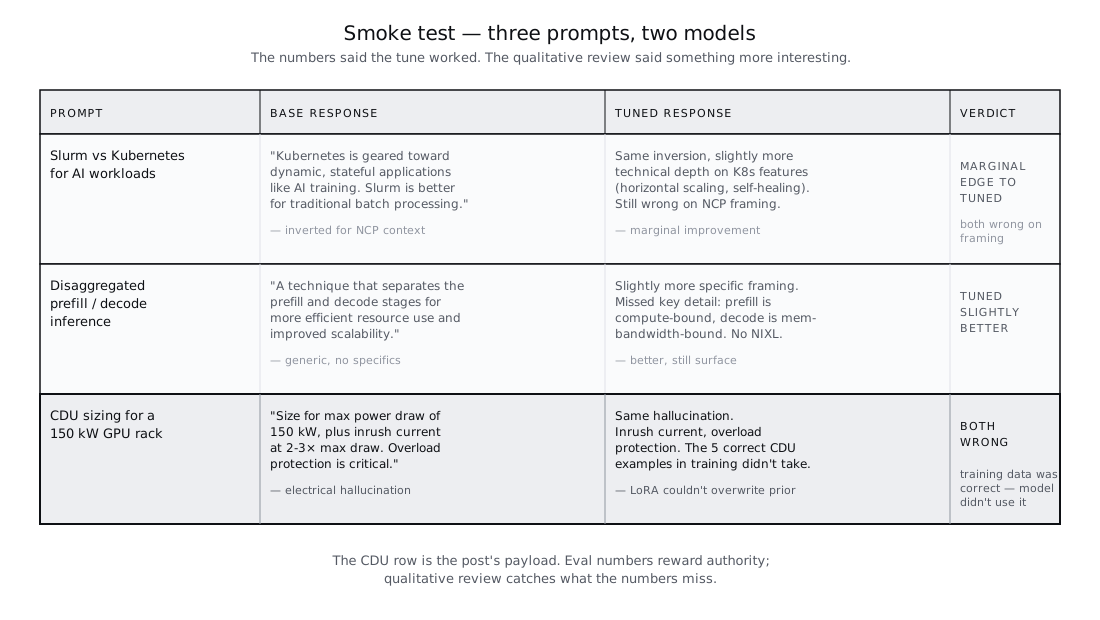
How much can a small, fast LoRA fine-tune shift a general model toward a specialized domain? Synthetic AI-infrastructure Q&A dataset, Llama-3.1-8B base, rank-16 LoRA on a single H100 via Brev. Eighteen optimizer steps, twenty-two seconds of wall clock. Loss came down cleanly. Eval numbers looked fine.

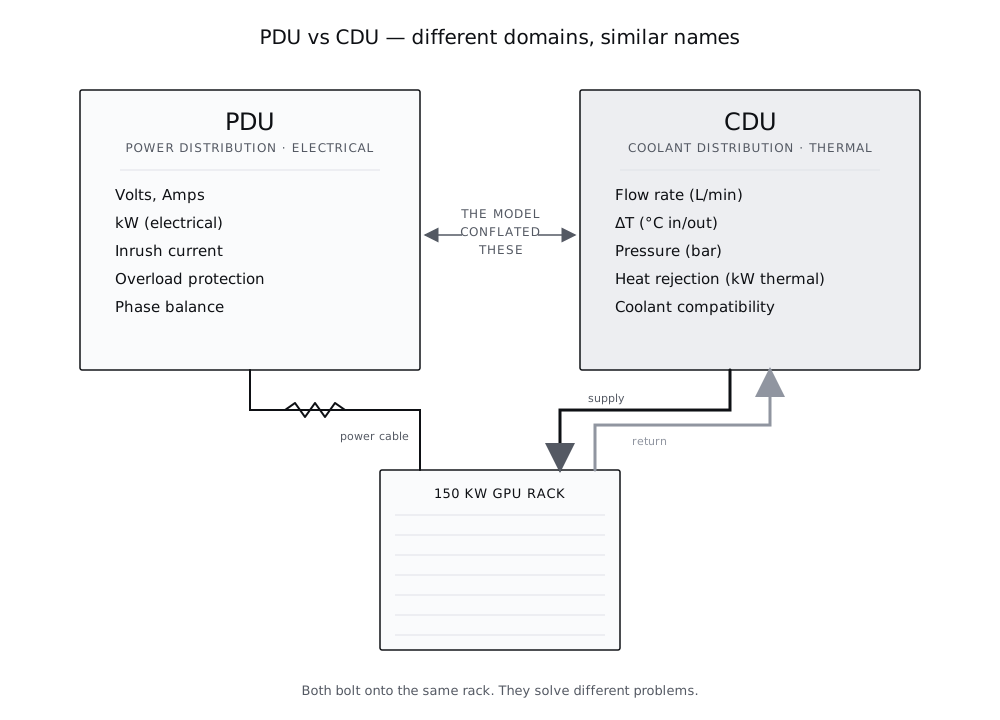
The interesting part wasn't the numbers. I asked the tuned model to explain CDU sizing for a 150 kW GPU rack — a domain I know well from technical sales work on two-phase cooling at Accelsius. Despite five clean CDU examples in my training data, the model confidently answered with inrush current and electrical-overload concepts. Pure category error: that's PDU reasoning, not CDU reasoning. Llama's pretraining corpus had millions of co-occurrences of sizing + kW + rack with electrical concepts. My LoRA saw five. The prior won by orders of magnitude.

What it taught

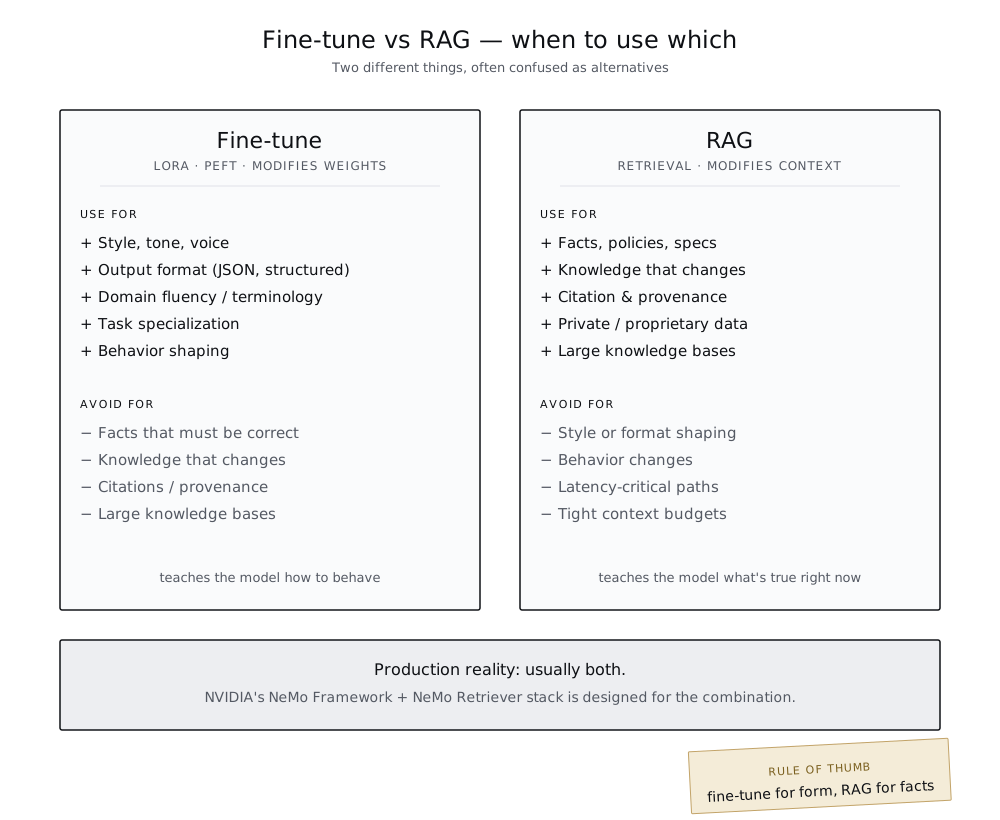
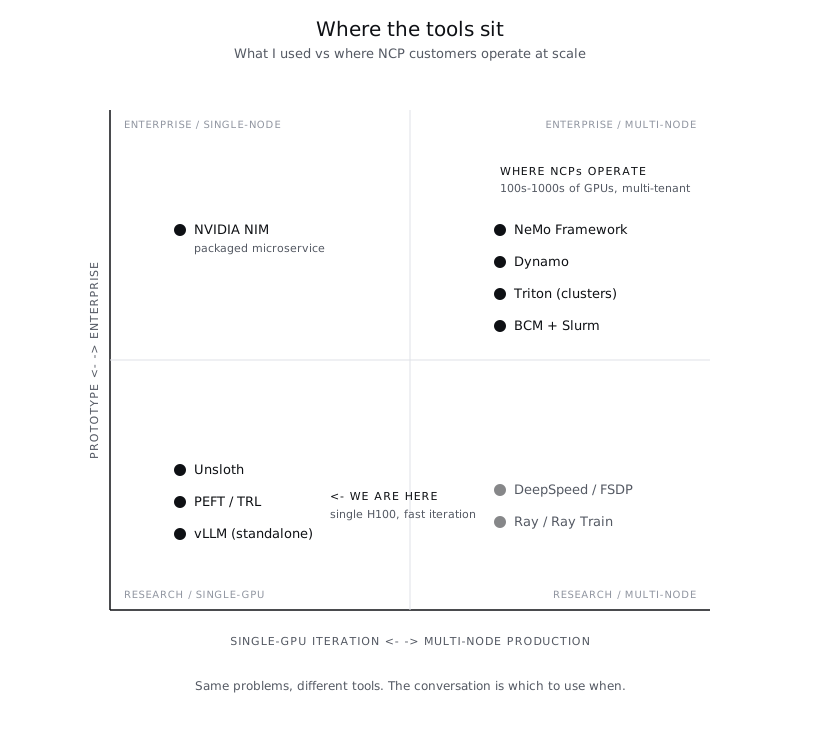
Fine-tune for form, RAG for facts. LoRA shifts behavior — style, format, domain fluency, task specialization. It's a weak tool for installing facts that contradict strong pretraining priors. NVIDIA's NeMo Framework + NeMo Retriever stack is designed for exactly this combination — and it's the conversation NCP customers asking "should we fine-tune Nemotron?" actually need to have.

Llama-3.1-8B LoRA rank-16 PEFT Unsloth H100 / Brev vLLM NVIDIA NeMo RAG
In progress
04 · Personal research

AI Agent From Scratch

Working through Manning's Build an AI Agent (From Scratch)

The natural next layer up from the LLM build. Same philosophy: no LangChain, no AutoGen, no framework abstractions hiding the mechanics. Tool-use loops, planning, memory, and evaluation — built from primitives so I understand what the popular agent frameworks are actually doing under the hood.

The agent so far handles multi-step tool use, simple planning over an action space, and short-term memory across turns. Each component goes in by hand before any abstraction layer goes on top.

Why it matters

AI infrastructure conversations are shifting from "how big a model can we run?" to "how does this agentic workload behave under load?" The two are very different problems. Building agents from scratch is the only way to answer the second one honestly.

Python Anthropic API Tool use ReAct loop Agent memory Eval harness
Live · Running 24/7
05 · Personal research · Dry-run mode

Prediction Market Trading Engine

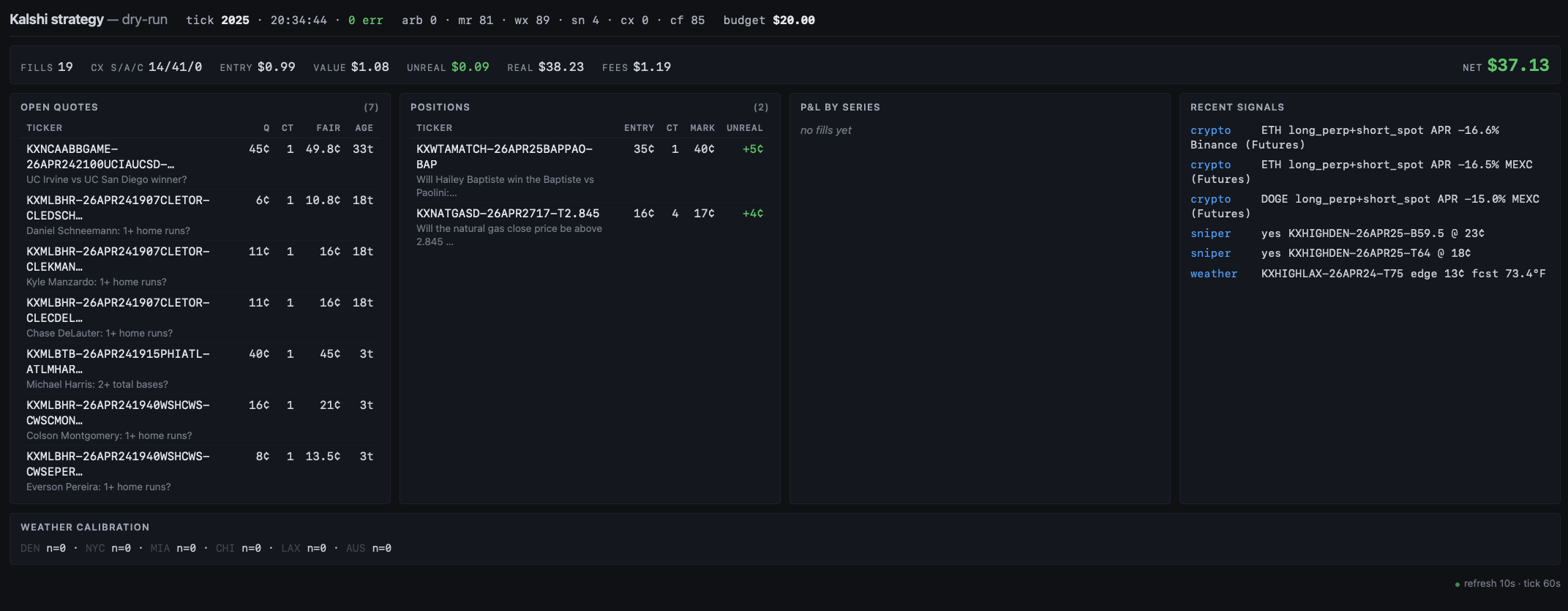
Multi-strategy Python engine · Kalshi & Polymarket

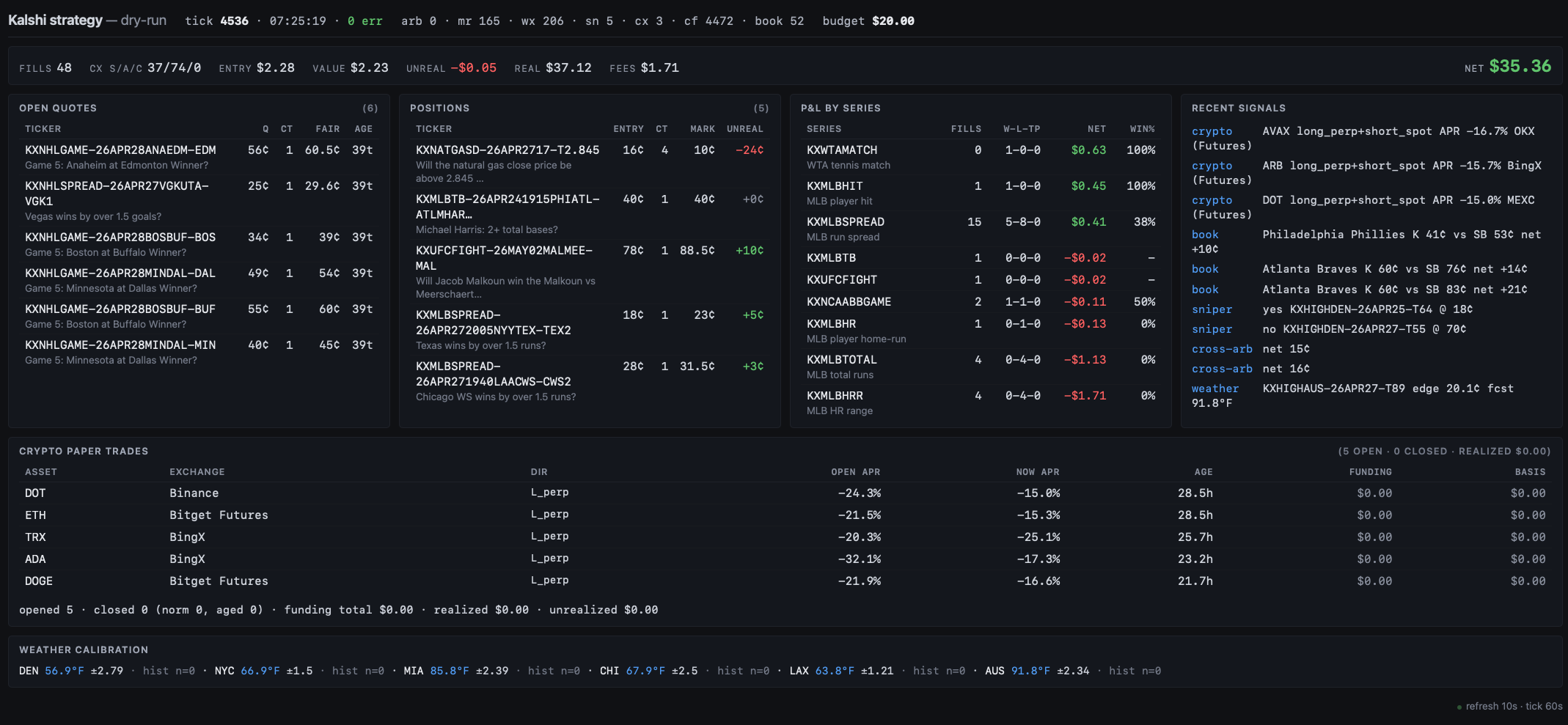
Prediction markets are one of the few public order books where retail can compete with institutions on price discovery — narrow products, clean data, no insider information. I wanted a sandbox where my code's decisions had real consequences.

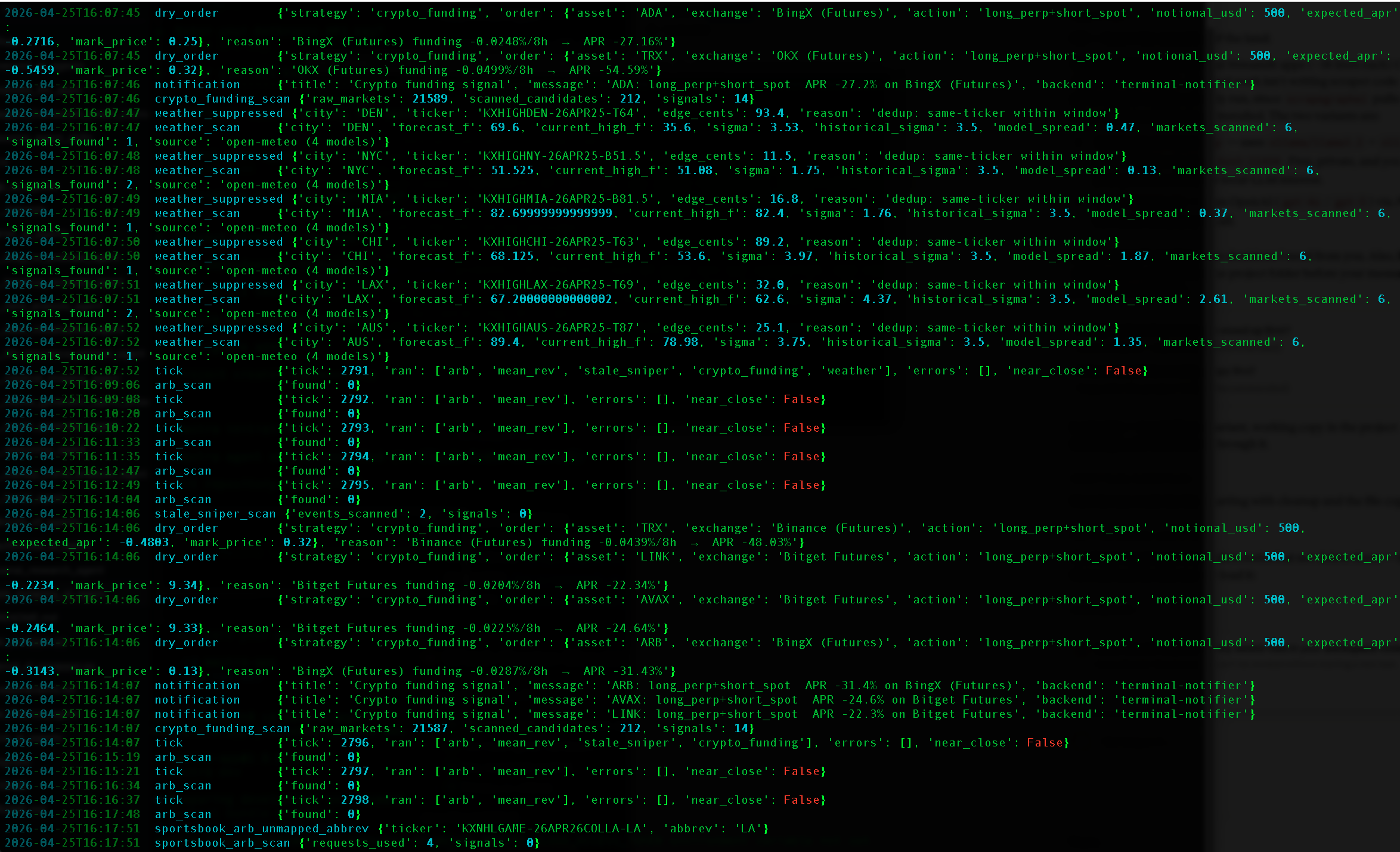
The engine runs six concurrent strategies under launchd: an arbitrage scanner crossing Kalshi and Polymarket on the same underlying events, a passive market-maker quoting around microprice fair-value with quarter-Kelly sizing, and weather-contract trading driven by calibrated NWS forecast models with regional bias corrections. Settlement, take-profit, and reinvestment all happen automatically.

Why this matters

It's been my best classroom for understanding what AI infrastructure actually has to support. Latency budgets matter when prices move in milliseconds. Memory access patterns matter when you hold state across thousands of markets. Observability matters when something's bleeding and you don't know which strategy. Most of what I sell becomes concrete when you have to operate it yourself.

Python asyncio Kalshi API Polymarket NWS forecast models launchd Quarter-Kelly sizing Microprice FV
Complete
06 · Personal research

LLM From Scratch

A small transformer · PyTorch · No framework shortcuts

Sitting across the table from CTOs while I sold GPU clusters and high-density cooling, I kept feeling the gap between knowing what ran on the hardware and knowing how it ran. Reading papers wasn't enough. I had to build one.

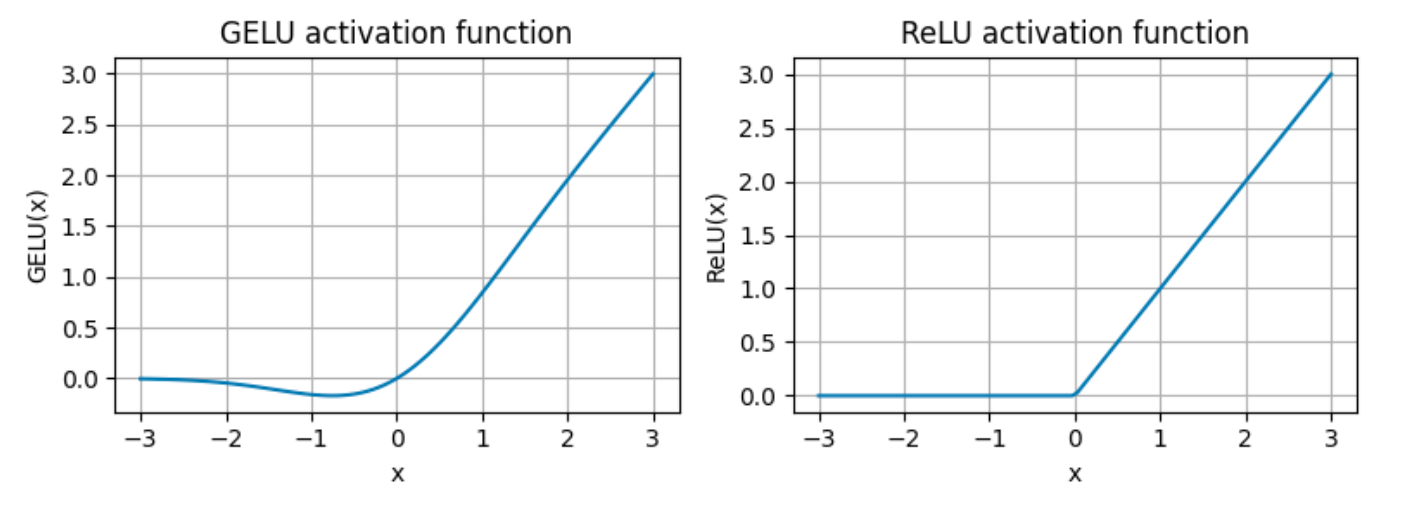
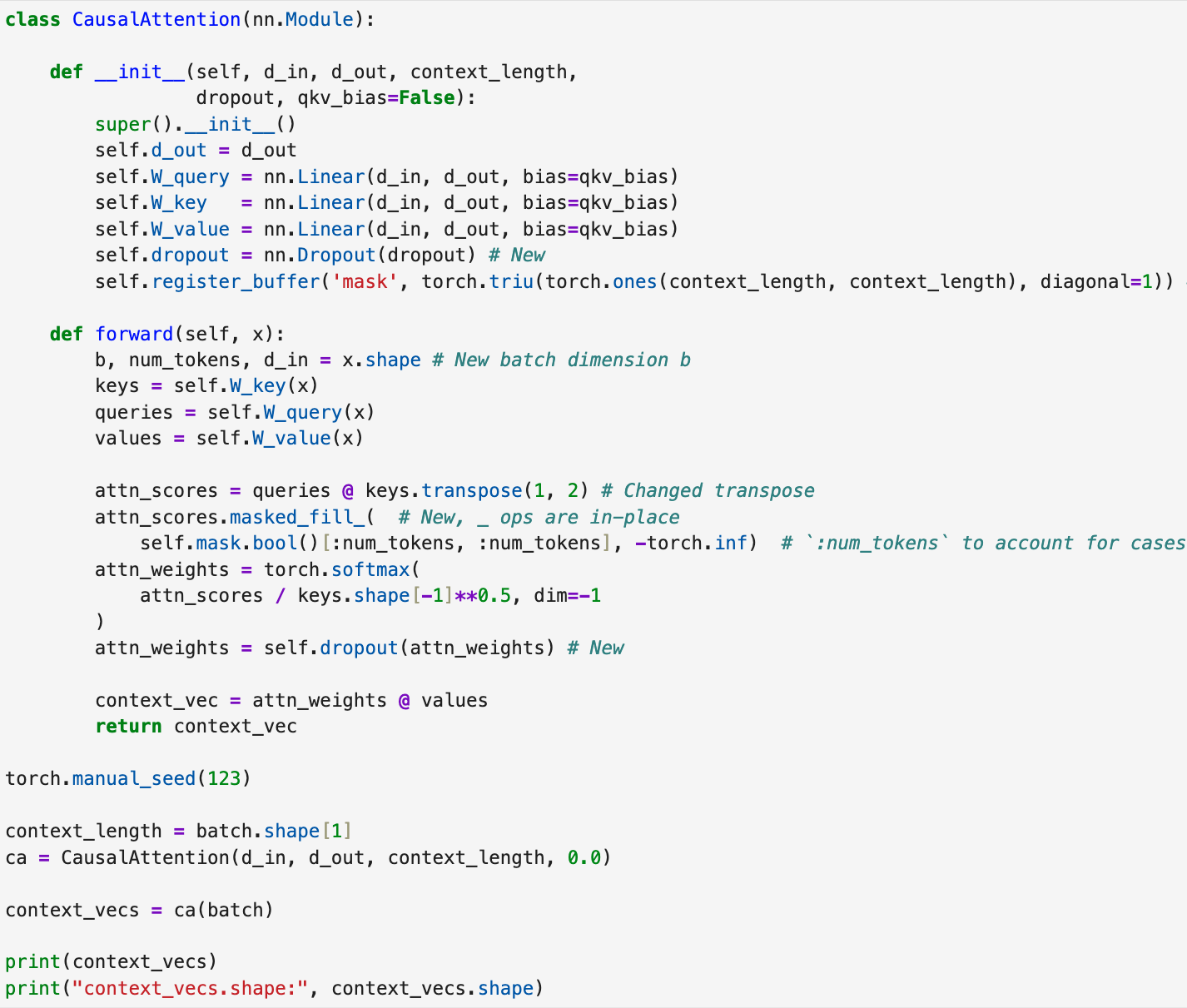
A small transformer in PyTorch, layer by layer — BPE tokenizer, multi-head self-attention written from the math, residual connections, layer normalization, and the full training loop. The model that came out is small and useful mostly for proving the underlying mechanics work. The understanding that came out has shown up in every cooling-and-compute conversation since.

What it taught

Attention is a memory-bandwidth problem before it's a compute problem. Context length is a quadratic cost. Pretraining is mostly babysitting. These are the things that turn into "what's your inference budget?" questions in a sales call — and I can now answer them from the inside.

PyTorch BPE tokenizer Self-attention GPT-2 architecture Mixed precision CUDA

What I bring to the table.

AI Infrastructure & Cooling

GPU-dense data-center design, two-phase direct-to-chip cooling, and the power / thermal trade-offs that define AI-factory economics.

Two-phase DTC · NVIDIA · AMD · rack-to-facility scale

AI & Machine Learning

Stanford ML specialization. Hands-on with LLM internals — transformers from scratch, embeddings, attention mechanics. Building it, not just talking about it.

PyTorch · Transformers · RAG · Claude & GPT

Cloud & Infrastructure

Triple AWS-certified. Production experience across GCP and AWS with Kubernetes, serverless, and hybrid architectures for enterprise workloads.

AWS (SA · Dev · SysOps) · GCP · Kubernetes · Linux

Enterprise Storage

Thirty years across every major platform — EMC, NetApp, IBM XIV, Cisco HyperFlex. From Symmetrix frames to all-flash arrays to hyper-converged.

EMC · NetApp · IBM · HCI · Data protection

Technical Sales & Closing

The rare engineer who runs a POC on Monday and presents to a CTO on Tuesday. Challenger methodology with a track record of outsized quota attainment.

Challenger Sale · POC execution · RFP / RFI

Development & Automation

Production code, not just slides. Custom tooling for sales automation, data-protection workflows, and AI-assisted proposals.

Python · C · Swift · Claude Code

Receipts.

The path
EMC→ Veritas→ IBM→ NetApp→ CreekPath→ Cisco→ SADA→ Accelsius→ VAST Data Federal
2026 — Present
VAST Data Federal Sr. Systems Engineer
  • Public-sector AI infrastructure — mapping federal mission requirements to VAST Data Platform capabilities
2024 — 2026
Accelsius Sr. Solution Architect
  • Solution architecture for two-phase direct-to-chip cooling at rack densities above 150 kW
  • Connected rack-level thermal and power design to GPU cluster scale-out — NVLink/InfiniBand topology, NCCL collectives, and training parallelism driving density and cooling requirements
  • Promoted to Sr. Solution Architect within five months
2022 — 2024
SADA (Insight) Sr. Cloud Engineer
  • Architected HA solutions on Google Cloud Platform for mid-market and enterprise
  • Led infrastructure assessments and prescriptive cloud-adoption roadmaps
  • Mentored junior engineers on sales strategy and POC execution
2013 — 2022
Cisco Systems Technical Solution Architect, Cloud
  • US West Region technical lead and primary closer
  • Drove adoption of hyper-converged infrastructure
  • Spearheaded Kubernetes and cloud-native mentorship across engineering
1995 — 2013
NetApp · IBM · EMC · Veritas Systems Engineering & Technical Leadership
  • Senior SE and architect roles across major enterprise storage — all-flash, XIV, Symmetrix, CLARiiON
  • Managing Director of Systems Engineering at CreekPath
  • Technical Product Manager at Veritas

Formal training.

Education & Certifications
B.S. Computer Engineering Kansas State University
Machine Learning Specialization Stanford University
AWS Solutions Architect Amazon Web Services
AWS Certified Developer Amazon Web Services
AWS SysOps Administrator Amazon Web Services
Certified Beer Judge Beer Judging Certification Program

Building something infrastructure-heavy? Let's talk.